
I tested four different pots of mulled wine in twenty-four hours last December. My kitchen smelled like a magical Christmas market in the center of Munich, but my first batch was an absolute undrinkable trainwreck. It was bitter, mouth-puckeringly sour, and tasted more like boiling hot vinegar than a cozy holiday cocktail. I was on a mission to destroy what is easily the most botched party drink in modern holiday entertaining: the scorched, muddy crockpot wine.
Let me be brutally honest with you. Most homemade mulled wine recipes on the internet are an insult to good alcohol. They tell you to buy cheap boxed plonk, dump ground cinnamon into the pot, toss in whole thick slices of raw orange, and boil the living daylights out of it for an hour.
What happens? The ground spices turn into a swamp of gritty sludge floating on top of every mug. The thick white pith on the orange slices leaches bitter chemical compounds into the liquid. Worst of all, boiling evaporates every single drop of alcohol into thin air, leaving you with flat, scorched grape juice that gives your guests an instant headache.
We are not doing that today.
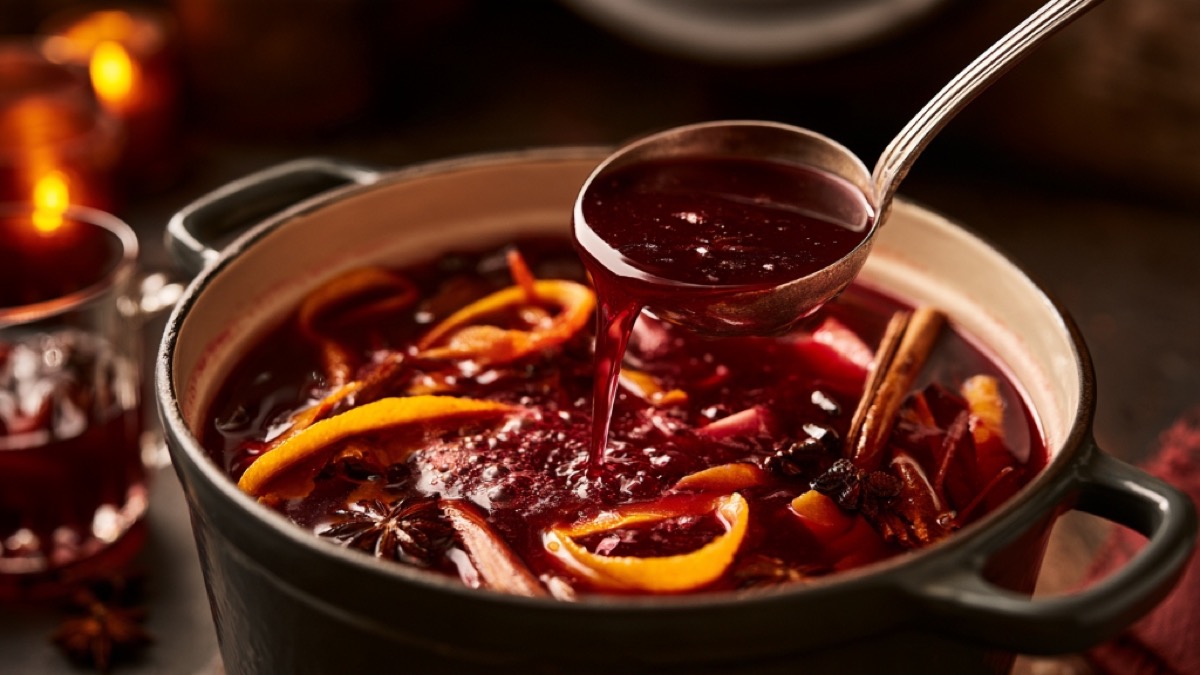
Today we are making real, authentic German Glühwein. We are talking about medium-bodied, fruit-forward red wine gently steeped below the evaporation point with whole cracked cardamom, fragrant star anise, and sweet cinnamon sticks. We extract pure citrus oils using fresh orange zest strips with zero bitter white pith, balance the acidity with rich maple syrup, and finish it with a generous splash of brandy. One sip from a warm glass mug on a freezing winter evening, and you will never host another holiday party without a pot bubbling on your stove (pair it with my 30 Christmas party food ideas and 25 Christmas cookie ideas for the ultimate holiday gathering).
The Food Science of The Simmer (Why Boiling Destroys Wine)
To make incredible mulled wine, you have to understand the physical chemistry of alcohol and heat.
Wine is a delicate solution of water, ethanol, organic fruit acids, and grape tannins. Ethanol has a boiling point of exactly 173 degrees Fahrenheit (78.4 degrees Celsius), which is significantly lower than water at 212 degrees.
If you let your mulled wine come to a rolling boil:
- The Alcohol Evaporation: You flash-vaporize the ethanol straight out of the pot. Within ten minutes of active boiling, your festive adult cocktail turns into non-alcoholic warm vinegar.
- Thermal Oxidation: Excessive heat rapidly oxidizes the delicate fruit esters in the wine, turning vibrant notes of dark cherry and blackberry into flat, stewed prune sludge.
- Tannin Bitterness: High heat extracts aggressive, harsh tannins from the grape skins and the spices, leaving a sandpaper-like dryness across your tongue.
The fix is stupidly simple. We keep the liquid at a gentle, lazy bare simmer between 150 and 165 degrees Fahrenheit. You want gentle aromatic steam rising from the surface and tiny pinprick bubbles hugging the sides of the pot, but never active bubbling. Covering the pot with a tight lid traps the volatile alcohol vapors, condensing them back into the liquid where they belong.
The Four Non-Negotiable Secrets to World-Class Glühwein
Follow these four rules and your holiday party will be legendary.
1. Pick the Right Wine. Do not buy an expensive sixty-dollar Napa Cabernet Sauvignon; the heavy oak and massive tannins will turn unpleasantly bitter under heat. At the same time, do not buy the cheapest five-dollar bottom-shelf jug wine, which is packed with synthetic sulfites and sugar. Pick an affordable, fruit-forward, medium-bodied red wine with low tannins and high berry notes: Merlot, California Zinfandel, Spanish Garnacha (Grenache), or Argentine Malbec.
2. Strip the Zest, Ditch the White Pith. This is the number one mistake home bartenders make. The white spongy layer beneath orange skin is called the albedo, and it is packed with intensely bitter chemical compounds called limonin. If you slice whole oranges into hot wine, that pith ruins the entire batch within twenty minutes. Use a sharp vegetable peeler to peel wide, thin ribbons of the outer orange skin (the flavedo), which holds all the fragrant citrus oils, and juice the fresh orange flesh directly into the pot.
3. Whole Spices Only. Throw your ground cinnamon and powdered allspice in the trash for this recipe. Ground spices do not dissolve in liquid; they form an oily, muddy film on top of the wine that sticks to your guests’ teeth. Always use whole cinnamon sticks, whole star anise pods, whole cloves, and lightly crushed green cardamom pods. They infuse clear, clean spice flavor without muddying the liquid.
4. The “Mit Schuss” Finish. In Germany, ordering Glühwein “mit Schuss” means having the bartender spike your warm mug with a shot of high-proof spirits. We stir a half cup of good French brandy, cognac, or dark spiced rum into the pot right after pulling it off the heat. That late addition restores warmth, provides a velvety mouthfeel, and gives the drink that rich, lingering holiday finish.
Festive Variations and Upgrades
This classic recipe is balanced to perfection, but you can easily tailor the flavor profile to match your personal bar cart.
The Apple Cider Holiday Blend: If you want a slightly sweeter, lower-proof punch for casual day-drinking or tree-trimming parties, swap out half of the red wine for fresh, unfiltered spiced apple cider. The crisp apple acidity balances the red wine beautifully, making it exceptionally crowd-friendly.
Bourbon Vanilla Mulled Wine: Swap the brandy for your favorite Kentucky bourbon and split half a fresh vanilla bean down the middle, tossing it into the pot with the spices. The toasted oak, caramel, and vanilla notes from the bourbon turn this into an outrageously cozy winter warmer.
Scandinavian Gløgg Style: To serve this Nordic-style, stir two tablespoons of dark raisins and two tablespoons of slivered blanched almonds into the pot during the final five minutes of steeping. Ladle a few raisins and almonds into the bottom of every mug and hand your guests small spoons so they can eat the boozy, plumped fruit as they sip.
The Alcohol-Free Mocktail: If you have guests who do not drink, do not leave them out in the cold. Swap the red wine for equal parts 100 percent tart cherry juice and unsweetened pomegranate juice. Simmer with the exact same orange zest, whole spices, and maple syrup, skipping the brandy. It looks identical in a mug, tastes complex and tart, and keeps everyone feeling festive.
Bennett’s Troubleshooting Guide
Did something taste off in your mug? Here is how to diagnose and fix it in real time.
Why does my mulled wine taste bitter? Bitterness almost always comes from one of two culprits: you either boiled the wine, or you let the spices steep for multiple hours on the stove. If your wine got bitter, pull the whole spices out immediately using a slotted spoon. Stir in one extra tablespoon of maple syrup and a fresh squeeze of orange juice. The natural sugars and fresh citrus acid will cut right through the astringent tannins.
Can I keep this in a slow cooker for a four-hour party? Yes, this is the ultimate party host hack. Combine all ingredients (except the brandy) in your slow cooker on the “Low” setting for one hour until hot, then switch the setting to “Warm” for the rest of the night. Add the brandy once it is warm. The “Warm” setting keeps the wine at roughly 145 degrees, safely below the alcohol evaporation point.
What do I do if the wine is too sweet? If you accidentally heavy-handed the maple syrup, do not panic. Squeeze the juice of a fresh lemon or half a tart orange directly into the pot, or splash in two ounces of dry red wine. The fresh acid cuts through cloying sugar in seconds.
Storage and The Next-Day Reheat
Mulled wine makes incredible leftovers. In fact, resting in the fridge overnight allows the spices to marry even deeper into the wine.
Refrigerator Storage: Let the mulled wine cool completely, strain out all the whole spices and orange zest through a fine-mesh sieve, and pour the liquid into a clean glass bottle or mason jar. Seal tightly and store in the fridge for up to five days.
The Gentle Reheat: Never microwave mulled wine on high power, or you will flash-boil the alcohol away in thirty seconds. Pour your desired portion into a small saucepan over low heat on the stove. Warm gently for five minutes until steam rises, ladle into a mug, and garnish with a fresh orange slice.